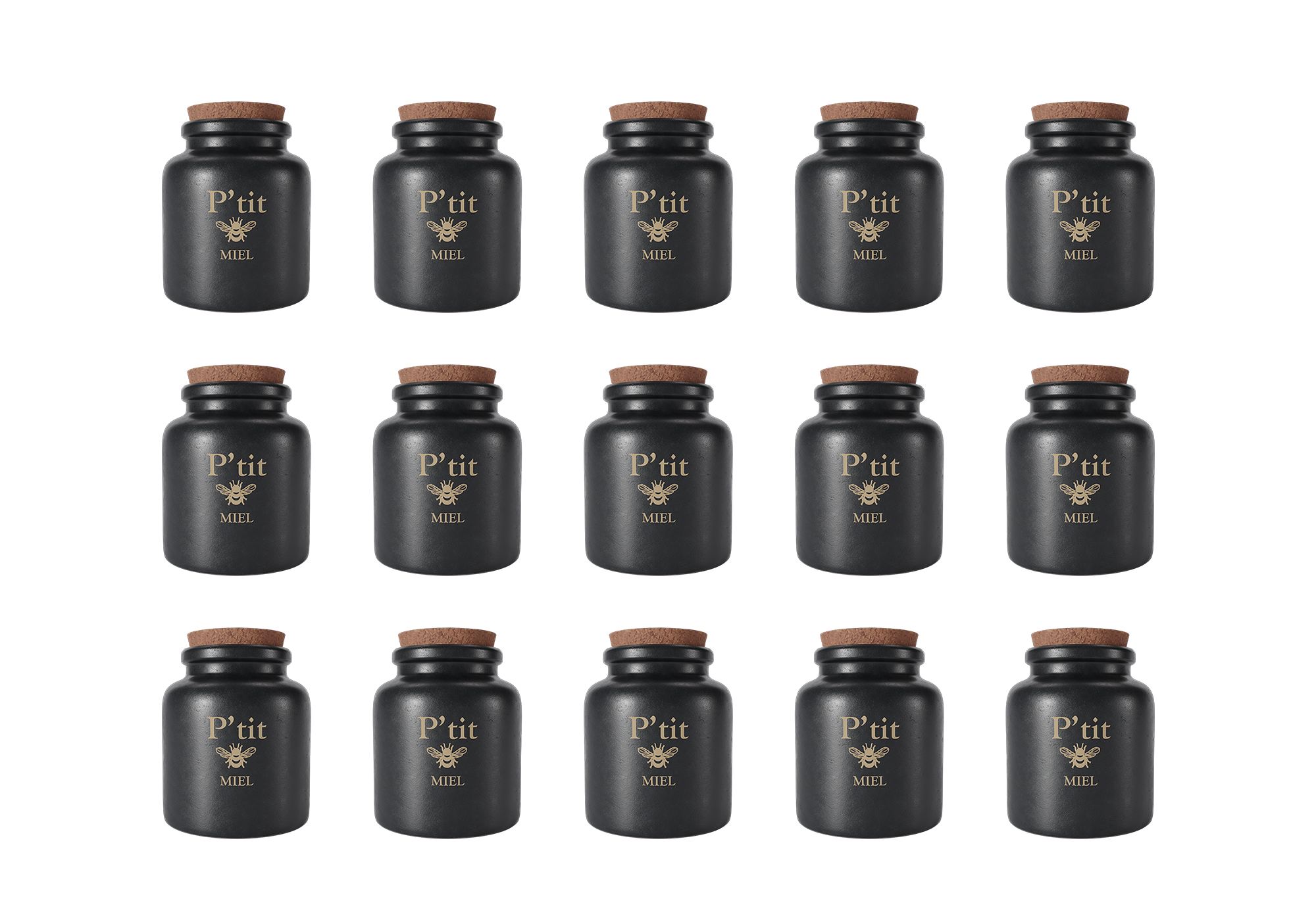
P’tit Honey - 350ml
P’tit Honey
TERRIOR
In the heart of the Luberon, the P’tit bees forage freely among lavender fields, thyme, rosemary, and a wild array of blossoms native to the region. This rich biodiversity, nourished by the southern sun, gives our honey its unique character – a pure expression of Provence. Every jar captures the subtle shifts of the seasons and the aromatic complexity of our surrounding flora.
TASTING NOTES
P’tit Honey has a luminous extra light amber robe, with a silky, fluid texture. The nose opens with delicate floral aromas, followed by notes of wild herbs and dried blossoms. On the palate, it’s smooth and layered – sweet without heaviness – with a gentle finish. Like wine, it evolves as you taste, revealing new dimensions with each spoonful.
HONEY AND FOOD PAIRING
Perfect on warm bread or swirled into yogurt with fresh fruit and nuts, our honey also pairs beautifully with goat cheese or aged cheeses. Use it to glaze roast vegetables, drizzle over fig tarts, or simply enjoy it by the spoonful – a true taste of Provence in its purest form.
WHERE CAN I FIND P’TIT HONEY?
Send P’tit a little email to [email protected] or give P’tit a call on + 33 7 86 02 62 51.
HOW DO I CHOOSE THE RIGHT HONEY?
Just like P’tit Honey, each jar is unique, shaped by the flowers visited by the bees and the season of the harvest. Its taste and colour vary according to the floral pigments and nectar sources.
For a smooth, subtle flavour, opt for a polyfloral or “all-flower” honey — a blend of various blooms. For a distinctive taste or specific health benefits, choose a monofloral honey, where one dominant pollen makes up at least 45% of the composition. Texture is also a matter of preference. Some honeys are naturally fluid, others creamy — but all crystallise over time, a natural process that varies in speed and texture depending on the floral source.
HOW TO TELL IF HONEY IS GOOD QUALITY?
There’s honey – and then there’s P’tit Honey.
Honey is one of the purest natural products, made entirely by bees. To preserve its authenticity, it’s crucial to pay attention to its origin and composition. Always check the label. Avoid jars marked “blend of EU and non-EU honeys” – these often lack traceability and may be diluted or altered. Instead, look for single-origin honeys from regions like Provence, Corsica or Occitanie, and certifications such as AOC, AOP, IGP or organic.
Honey is not something to buy in bulk, it is a product to buy with care, and as such, it can range in price, as its quality far out-values the quantity. Essentially, small, local, and transparent is the clearest path to true quality.
WHY DO WE NEED TO HELP PROTECT OUR FRIENDS THE BEES?
Across the world, many bee species are in decline due to habitat loss, pesticides, and climate change. At P’tit, we’re doing our part to protect these vital pollinators by nurturing a healthy, chemical-free environment where bees can thrive. From planting wildflowers between the vines to maintaining organic and biodynamic practices, every part of the domain is designed to support biodiversity and keep our buzzing friends well-fed and safe. After all, no bees, no P’tit.
“A day without a friend is like a pot without a single drop of honey left inside.”
– Winnie the Pooh